
Kategória: Könyvtárosok ajánlásával
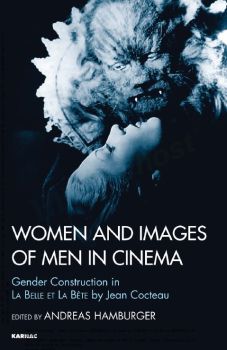
Women and men in cinema are imaginary constructs created by filmmakers and their audiences. The film-psychoanalytic approach reveals how movies subliminally influence unconscious reception. On the other hand, the movie is embedded in a cultural tradition: Jean Cocteau’s film La Belle et la Bete (1946) takes up the classic motif of the animal groom from the story of Cupid and Psyche in Apuleius’The Golden Ass (originally a tale about the stunning momentum of genuine female desire), liberates it from its baroque educational moral (a girl’s virtue and prudence will help her to overcome her sexual fears), and turns it into a boyhood story: inside the ugly rascal there is a good, but relatively boring prince – at least in comparison to the monsters of film history.
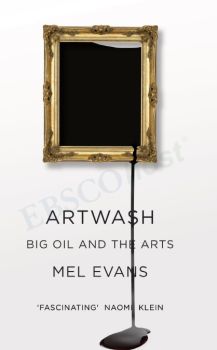
Published on the fifth anniversary of the BP Deepwater Horizon disaster, Artwash is an intervention into the unsavoury role of the Big Oil company’s sponsorship of the arts in Britain. Based on a high profile campaign, Mel Evans targets Chevron, ExxonMobil, BP and Shell’s collaboration with institutions such as the Tate in an attempt to end the poisonous relationship forever. Based on years of undercover research, grassroots investigation and activism as well as performance and cultural interventions, Mel Evans draws together the story of the campaign and its journey which has gone from strength to strength.
Why are jokes funny? Why do we laugh? In Funny Peculiar, Mikita Brottman demurs from recent scholarship that takes laughter– and the broader domain of humor and the comical–as a liberating social force and an endearing aspect of self-expression. For Brottman, there is nothing funny about laughter, which is less connected to mirth and feelings of good will than to a nexus of darker emotions: fear, aggression, shame, anxiety. Brottman rethinks not only the mechanisms of humor but also the relation of humor to the body and the senses.
The demand for rich Internet applications (RIAs) such as complete storefronts and interactive surveys is skyrocketing, as is the pressure to create these dynamic apps overnight and at low cost. This in-depth Bible provides the step-by-step instructions you need to quickly create RIAs in Flash using cost-effective, open-source PHP programming tools. You’ll learn how PHP works, when you should use it in Flash, and above all, vital security techniques for keeping your interactive sites secure.
Livia (58 B.C. – A.D. 29) the wife of the first Roman emperor, Caesar Augustus, and mother of the second, Tiberius wielded power at the center of Roman politics for most of her long life. Livia has been portrayed as a cunning and sinister schemer, but in this biography (the first in English devoted to her) Livia emerges as a much more complex individual. Achieving influence unprecedented for a woman, she won support and even affection from her contemporaries and was widely revered after her death.
Stuart Nicholson’s biography of Ella Fitzgerald is considered a classic in jazz literature. Drawing on original documents, interviews, and new information, Nicholson draws a complete picture of Fitzgerald’s professional and personal life.
In Reading the Bible Ethically, Eric Douglass takes account of the author’s subjective contributions, so that the text functions as the author’s voice. Dealing with a voice suggests ethical principles, where interpretation doesn’t silence or manipulated that voice.
What was different about the environments that women created as architects, designers and clients at a time when they were gaining increasing political and social status in a male world? Through a series of case studies, Women’s Places: Architecture and Design 1860-1960, examines in detail the professional and domestic spaces created by women who had money and the opportunity to achieve their ideal.
The relationship between public and private spheres is one of the key concerns of the modern society. This book investigates this relationship, especially as manifested in the urban space with its social and psychological significance. Through theoretical and historical examination, it explores how and why the space of human socities is subdivided into public and private sections.
Why would an architect reach for a pencil when drawing software and AutoCAD are a click away? Use a ruler when 3D-scanners and GPS devices are close at hand? In Why Architects Still Draw, Paolo Belardi offers an elegant and ardent defense of drawing by hand as a way of thinking. Belardi is no Luddite; he doesn’t urge architects to give up digital devices for watercolors and a measuring tape. Rather, he makes a case for drawing as the interface between the idea and the work itself. A drawing, Belardi argues, holds within it the entire final design.